A bathroom remodel goes wrong in predictable ways: beautiful finishes laid over neglected waterproofing, storage decided after the vanity was ordered, and ventilation treated as an afterthought. Getting the sequence right is what makes the difference between a bathroom that photographs well and one that still feels right long after the reveal.
Waterproofing Comes Before Beauty
Everything you notice in a finished bathroom sits on top of layers you never see, and those layers decide how the room ages. Wet areas need a continuous waterproof membrane over a properly prepared substrate, with the junctions between floor and walls treated as carefully as the flat surfaces.
Leaks rarely announce themselves where they begin. Water finds the smallest gap and travels along joists, so a stained ceiling in the room below may have nothing to do with the fixtures directly above it. Insisting on correct preparation before tiles are laid is the single most useful decision you can make in the whole project.
Ventilation Decides How the Room Feels
Humidity is why so many bathrooms feel cold, smell faintly damp or grow dark patches in the corners of the ceiling. An extractor fan sized for the room, ducted to the outside rather than into a loft, does more for comfort than any upgrade to the fittings.
Habits matter too. Running the fan for a while after a shower, leaving the door open once the worst of the steam has cleared, and squeezing water off the shower screen all reduce the moisture that has to be managed elsewhere. Where there is a window, use it alongside ventilation rather than instead of it.
Settle the Layout Before You Choose Finishes
It is tempting to start with tiles, but layout governs how the room will feel every day. Which way does the door swing? Is there enough clearance beside the vanity? Does the shower open without trapping you against the wall? Can a towel rail sit somewhere you will actually reach it from the shower?
Think about who uses the room and when. A family bathroom serving children needs floor space and durable surfaces; a main bathroom used by adults might favour a generous shower over a tub that rarely fills. If older family members use the room, a low-threshold entry and grab points planned into the design cost little now and make a real difference later.
Storage That Follows the Morning Routine
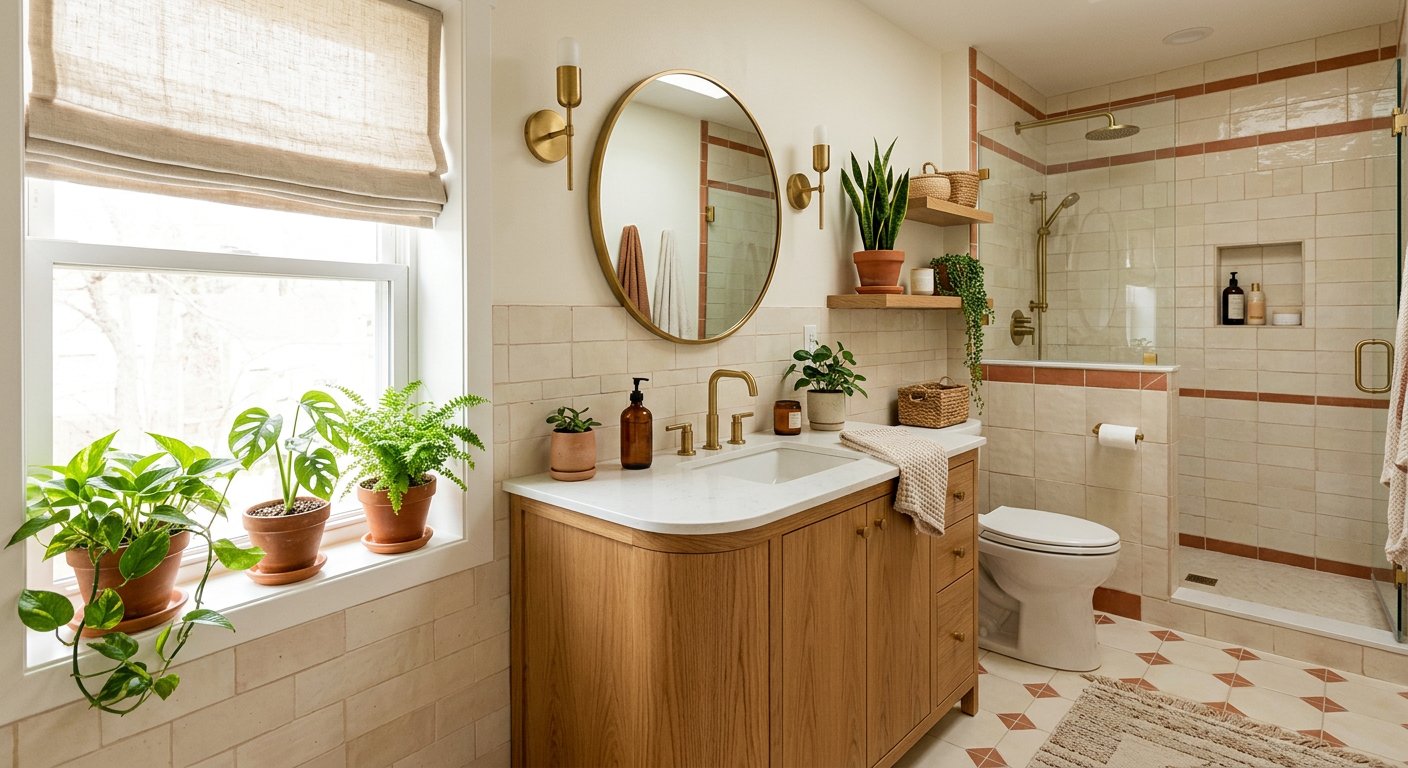
Watch what actually accumulates in a bathroom: bottles, towels, hairdryers, cleaning supplies, spare toiletries bought in bulk. Then design storage around those objects rather than around the space left over after the vanity was positioned. Recessed niches in a shower, deep drawers in a vanity and a mirror cabinet with internal sockets handle most of it discreetly.
Leave some capacity. A bathroom designed to hold exactly what you own today will feel cramped the moment your household changes. A tall cupboard or a slim wall cabinet with empty shelves is worth more than a decorative surface that collects clutter instead.
Light the Room in Layers
A single bright ceiling light is the most common bathroom mistake. It flattens faces at the mirror and throws hard shadows into the corners. Better is a combination: general light from above, task light beside or over the mirror for shaving and make-up, and a low, warm light for evenings and night-time visits.
A bathroom is judged in the morning, when nobody in the household is at their most patient. Lighting that flatters a face and a floor that stays safe when wet matter more than any tile trend.
Choose finishes with maintenance in mind. Fewer joints and mid-tone grout hide everyday marks far better than small format tiles and pale grout lines, and slip-resistant flooring is essential where water regularly lands. Textured surfaces underfoot feel warmer and safer for everyone, especially older members of the family.
Living Through the Work
Remodels are disruptive, but they can be organised around your household. Agreeing decisions in advance avoids delays waiting for a tile or fitting to be chosen, and staging the work so another bathroom or a temporary arrangement stays useable makes the weeks far easier.
Protecting the rest of your home matters as much as the work itself: dust barriers, protected floors, a clear route to the stairs and a daily tidy-up. Ask any contractor how they intend to manage the mess before you appoint them — the answer tells you a lot about the finished result.
Do it once, do it properly, and a bathroom becomes the calmest room in the house. The waterproofing you never see, the ventilation you barely notice and the storage that quietly absorbs the clutter are what you will thank yourself for long after the tiles stop feeling new.